300 River Place
A Detroit Rivertown building claims its rightful place as a historic neighborhood cornerstone and a basecamp welcoming new workers.
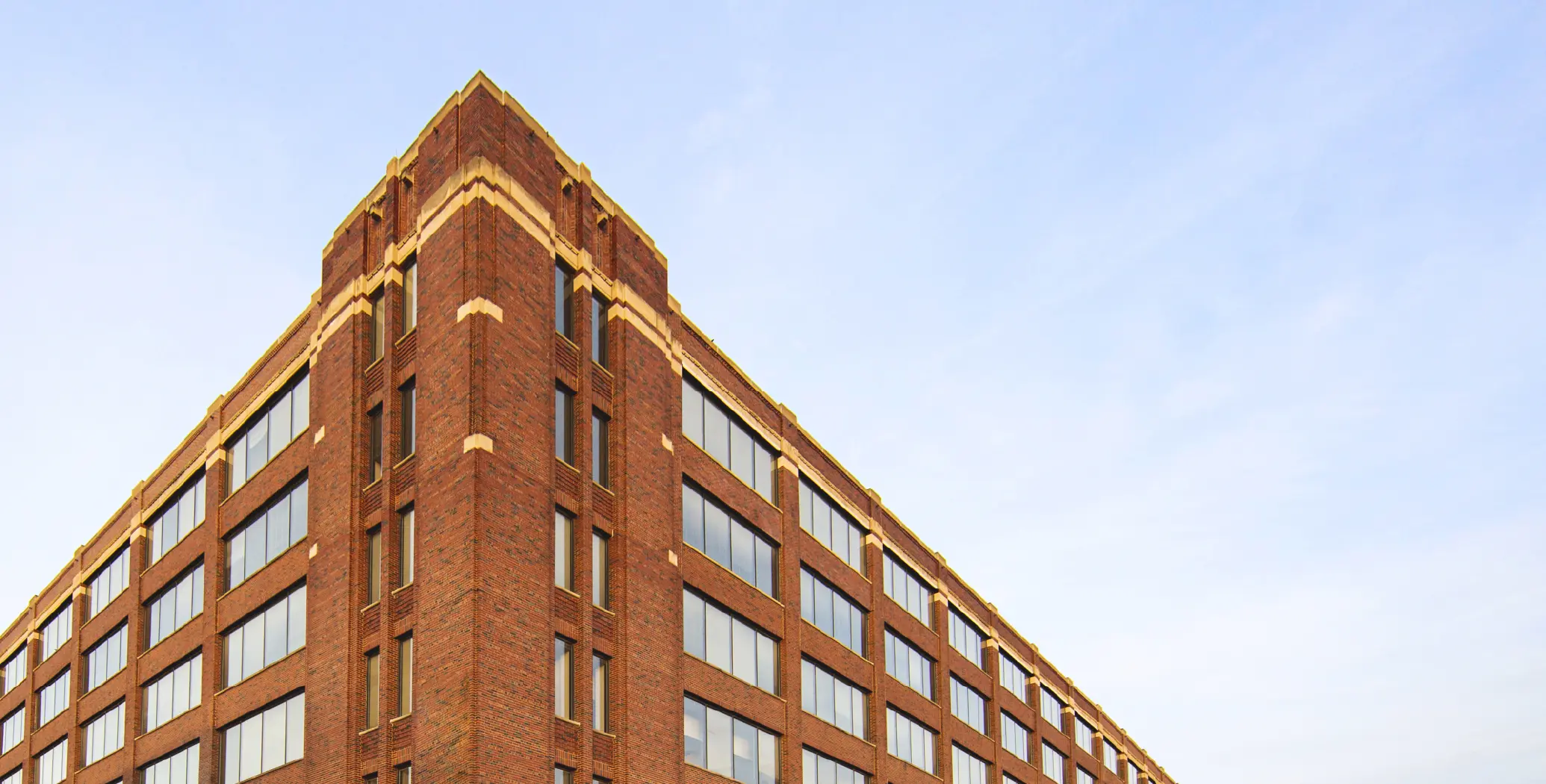


300 River Place has been a commanding presence in Detroit's Rivertown district for nearly 100 years. Designed by famed architect Albert Kahn for Parke-Davis' flagship pharmaceutical facilities campus, this six-story building was acquired by The Stroh Brewery Company which gave the building it's current name, along with renovations through the 1990s. Khan's signature use of skylight atriums, large exterior windows, thick weight-bearing construction and geometric details are still its defining features today.
While 300 River Place had weathered decades of uncertainties, it had also left many people uncertain about how to engage with it: who can come in, who works there, and how do people inside connect with the amenities outside? BasedOn was asked to take a deep look and help define how this landmark can come to life with a fresh outlook. And with this building just being the beginning of a new vision for the east Riverfront, 300 River Place has the unique opportunity to set the tone for more to come.
Strategy
One of the first acquisitions made in this area by one of Detroit's premier real estate developers, 300 River Place faced more than just the challenge of filling 375,000 square feet of commercial space. The building has much to offer, yet lacked a welcoming accessibility that would attract business tenants and inspire their employees. We discovered that its 100-year old history and imposing presence placed it squarely at the crossroads: of past and future; of city and river; of work and play; and between neighborhood mini-hubs finding their own distinct new lives. As a Bedrock property that offers easy access, an assured presence, and inspiring options for tenants and workers alike, we found that 300 River Place could now realize its role as a connector, an inviting place for people to work and engage with the neighborhood. With its straightforward, easy-going, hardworking and supportive personality, 300 River Place invites you to Start Here.
Verbal Identity
The key audience for 300 River Place's story is potential tenants for the six floors of flexible space. Considering businesses interested in being close to downtown Detroit but needing flexibility to operate in new ways, the narratives BasedOn developed focus on “Space that works for you.” We also looked at how the brand pillars–easy access, assured presence and inspiring options–could generate additional messaging not only to prospects but also to tenant businesses and workers. Our narratives highlighted the building's appealing assets, and also wove in aspects of the hard-working and easygoing feel of the space to help people envision themselves there on the riverfront. Using the voice and messaging themes, 300 River Place is also able to effectively connect with area businesses, neighborhood residents and visitors, and even define its presence in the larger visions for the riverfront district's evolution.
Visual Identity
Inspired by the building's sturdy design and clean details, the brandmark stands out as the key visual element. 300 River Place is most recognized by its name, so our team designed the 300 to extend beyond itself and connect around the full name, creating a strong and geometric foundation. The typeface we chose brings a very subtle nod to the art deco era, a thoughtful detail that lightens and balances the brandmark's heft. The 300 itself can stand alone as a digital icon or a graphic design element, hinting at the orderly brickwork of the building or the sidewalks that invite explorers to roam.
The Visual Elements
All of the visual elements reflect 300 River Place's foundational role and its accessible, flexible nature. The deep river green primary color palette is expanded with natural blues and sandstones, a nod to the natural elements nearby. Turning to the built environment and the building's strong lines, our designers used the 300 and connecting lines from the brandmark to stretch out long horizontal and vertical panels. These graphic extensions can be used as decorative elements, text boxes, and image frames. The squares and grids which are found throughout the building's design also inspire a set of graphic grids, reinforcing concepts of connections and discovery. Photography focuses on open interior spaces and abstracted architectural details, along with warm and realistic pictures of people working and enjoying time together.
Summary
With a brand identity that honors its history and engages people to look forward, 300 River Place has a compelling story to share with prospective businesses and new tenants alike. Design elements lend themselves to fresh signage and wayfinding systems, as well as sales materials and even accessories like notebooks and water bottles. The narratives make people feel welcome to see themselves and be themselves in spaces that work for them, and that deliver the best of both city and riverfront. And as 300 River Place and its neighboring spaces continue to come to life with ways for everybody to connect, there are endless opportunities through their messaging themes to invite people to Start Here.